

The Woman Nomad
Movement & Freedom.

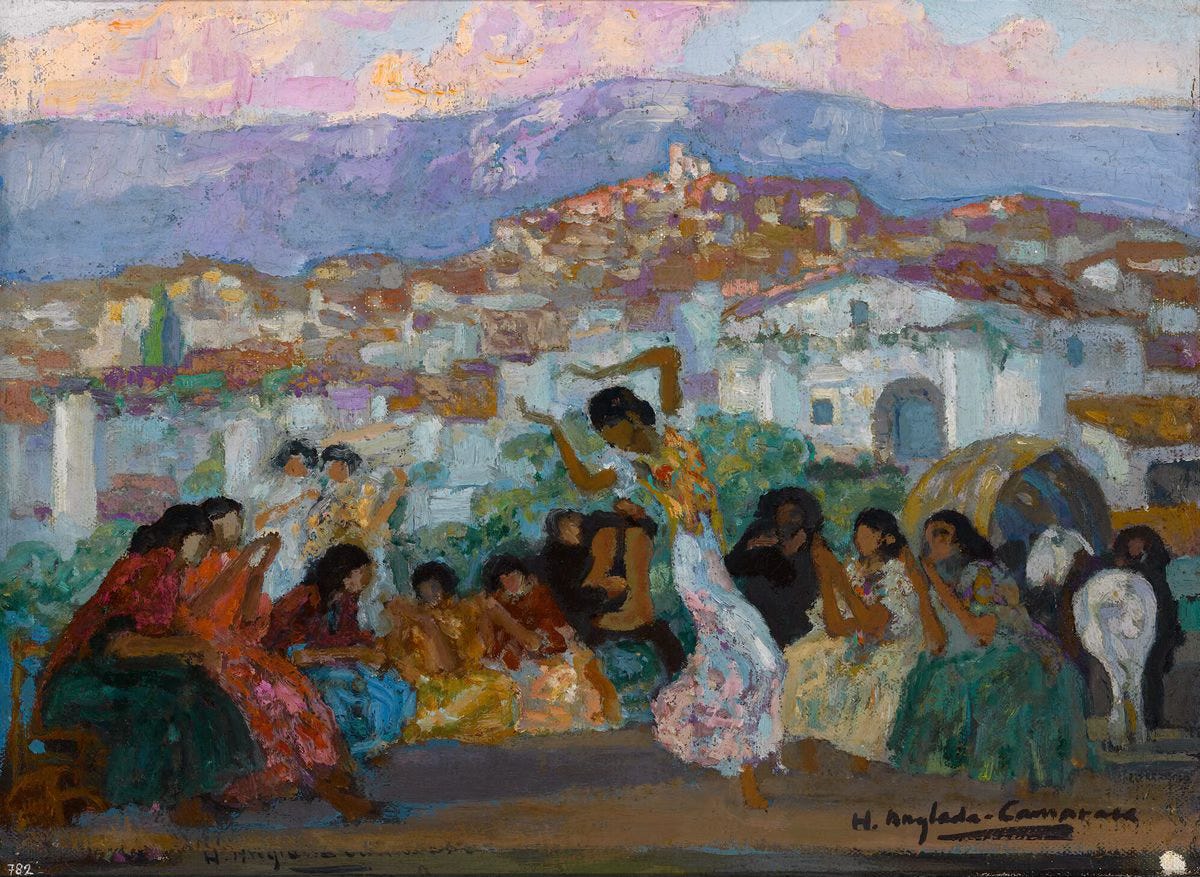
Today’s topic we begin with a few quotes by Fatema Mernissi, a Moroccan sociologist and feminist writer who gave unique perspectives on women’s experiences:
“A woman could be totally powerless, and still give meaning to her life by dreaming about flight.”
“There are two prerequisites to growing wings: the first is to feel encircled and the second is to believe that you can break the circle.”
“Her message is simple: a woman must lead her life like a nomad. She must always stay alert and ready to leave, even if she is loved.”
The first two are from her “Dreams of Trespass: Tales of a Harem Girlhood” and the third is from “Scheherazade Goes West: Different Cultures, Different Harems”.
Fatema’s quotes, while describing a very specific sociological and cultural context, do speak to something that can be fairly universally observed in women. Women everywhere dream of flight and of running away. This also manifests as her love of the life of a nomad, of travel, of adventure, her fascinations with the [albeit mythologised and romanticised] stories of the Romani people, the Bohemians, the rock stars, the “bad boys”, the wind in the hair on an open road and much more. Seen in its essence, all of this is simply her love and craving for freedom and free movement.
Marianne Faithfull also sings of it in her “The Ballad of Lucy Jordan”:
“The morning sun touched lightly on
The eyes of Lucy Jordan
In a white suburban bedroom
In a white suburban town
As she lay there 'neath the covers
Dreaming of a thousand lovers
'Til the world turned to orange
And the room went spinning round
At the age of thirty-seven
She realised she'd never ride
Through Paris in a sports car
With the warm wind in her hair
So she let the phone keep ringing
And she sat there softly singing
Little nursery rhymes she'd memorised
In her daddy's easy chair
The evening sun touched gently on
The eyes of Lucy Jordan
On the roof top where she climbed
When all the laughter grew too loud
And she bowed and curtsied to the man
Who reached and offered her his hand
And he led her down to the long white car
That waited past the crowd
At the age of thirty-seven
She knew she'd found forever
As she rode along through Paris
With the warm wind in her hair.”
“She knew she’d found forever” says Marianne, suggesting that it is not a mere distraction that the woman is looking for. It is not an avoidance or a symptom of an avoidant attachment that the therapeutic perspective would quickly jump to define it as — she is seeking “forever”, something real. In short, she is looking for a god, if you are a believer.